Best Credit Cards 2026-Credit History Zero to Hero
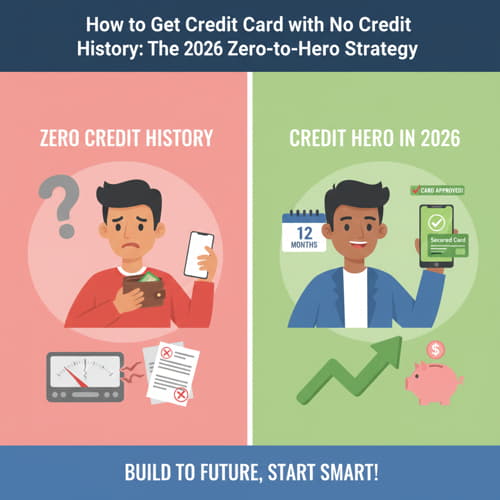
How to Get a Credit Card with No Credit History: The 2026 Zero-to-Hero Strategy
The Credit Catch-22: Your Guide to Breaking the Cycle
Starting your financial journey can feel like navigating a maze built by bankers. The biggest hurdle? The dreaded “Credit Catch-22”: You need credit history to get a credit card, but you need a credit card to get credit history. It’s frustrating, and as a US consumer in 2026, you might feel stuck.
However, the modern financial landscape is designed to offer solutions. This comprehensive guide, built on experience and strategic expertise, will walk you through the proven paths to securing your first credit card. We’ll show you exactly how to bypass the initial barriers, establish your credit file, and set the foundation for a flawless financial future.
 1. The First Step: Understanding the Credit Score Vacuum
When a lender checks your application and finds no credit history, your score isn’t necessarily bad; it’s often just non-existent. This is why the approval process is so hard. Lenders need data (your Trustworthiness) to calculate risk. Our goal is to quickly and responsibly fill that data vacuum.
A. Why Traditional Cards Say ‘No’
Traditional unsecured cards (the ones most people want) are based on proven repayment history. Since you have none, banks have no reason to extend credit. Our strategy focuses on products designed to manage this risk.
B. The E-E-A-T of Your Application
-
Experience: You lack it, so we rely on other factors.
-
Expertise: We must show the lender you are financially responsible in other areas.
-
Trustworthiness: We build this by using secured and co-signed products.
2. The Top 3 Zero-to-Hero Credit Card Solutions
When starting with a blank credit slate, you must look beyond the standard rewards cards. These three options are the most effective entry points for new credit users.
A. Secured Credit Cards: The Essential Building Block
A secured credit card is the most reliable tool for building credit quickly.
-
How They Work: You provide a cash deposit to the issuer (usually $200 to $500), and this deposit becomes your credit limit. The deposit acts as collateral.
-
The Crucial Feature: Unlike debit cards, secured cards report your payment activity (on-time payments, credit utilization) to the three major credit bureaus (Experian, Equifax, TransUnion). This is how you build history.
-
Expert Tip (Experience): Treat this deposit like a temporary investment. After 6-12 months of flawless use, many secured cards will “graduate” you to an unsecured card and refund your deposit. Look for cards with low annual fees and a clear path to graduation.
B. Student Credit Cards (If Applicable)
If you are currently enrolled in a college or university, student cards are your best friend.
-
Lenient Approval: Lenders are often more forgiving about a lack of history, knowing that students are future high-value customers.
-
Proof of Enrollment: You will usually need to provide proof of enrollment and potentially proof of income (even if it’s part-time or scholarship income).
-
The Limit Factor: Limits are usually low ($500 to $1,000), which actually helps you keep your utilization low—a key credit score factor.
C. Authorized User Status: Borrowing Trust
This method is fast, but it requires deep trust and communication.
-
How It Works: A family member (parent, spouse) with excellent credit adds you as an “authorized user” on their existing card. You get a card with your name on it.
-
The Credit Boost: The primary cardholder’s excellent payment history and low utilization are often added to your credit report. This is called “piggybacking” on credit.
-
Trustworthiness Warning (Human Touch): While effective, you must ensure the primary user is financially disciplined. If they miss a payment or max out the card, your new credit profile will be immediately damaged.
3. The Hidden Helpers: Showing Financial Responsibility Beyond Credit
Since you can’t show credit history, you must show responsibility in other areas of your life. These are ways to prove your Trustworthiness to lenders.
A. Credit Builder Loans: The Installment Strategy
This is an excellent tool often overlooked by newcomers.
-
How It Works: A bank or credit union gives you a small loan (e.g., $1,000), but they keep the money locked in a CD or savings account. You pay the loan back in monthly installments. Once paid off, the money is released to you.
-
The Benefit: The lender reports your regular, on-time monthly payments to the bureaus as an installment loan. This provides your credit profile with a valuable mix of credit (both revolving and installment), which can boost your score.
B. Reporting Rent and Utility Payments (The Experian Boost Factor)
Newer services allow you to add positive non-credit data to your file.
-
Services: Platforms like Experian Boost or certain rent reporting services allow you to link your bank account to include on-time utility, cell phone, or rent payments in your credit file calculation.
-
Expertise: Use these free tools, as they can sometimes provide an immediate, albeit small, score increase. This is especially useful if your credit file is thin.
4. Applying for the Card: Your Step-by-Step Execution Plan
Once you choose your method (likely a secured card), follow this checklist to maximize your chances of approval:
-
Gather Documentation: Have your Social Security Number (SSN), valid government ID, income details, and current address ready.
-
Check Pre-Qualification: Many secured card issuers offer a “pre-qualification” tool that does a soft pull on your credit (which doesn’t affect your score). Use this to check your odds before officially applying (a hard pull).
-
Start Small: Apply for one card only. Applying for multiple cards within a short time frame signals desperation to lenders and can damage the thin file you’re trying to build.
-
Fill Out Honestly: Honesty is the best policy. Always be truthful about your income and employment status.
5. Maintaining Your Hero Status: The Golden Rules of Credit (E-E-A-T)
After you get that first card, the real work begins. Your goal now is to establish strong Authoritativeness and Trustworthiness.

5 Common Credit Card Myths Debunked in 2026: Financial Misconceptions That Cost You Money

What Happens If I Only Pay the Minimum on My Credit Card in 2026? The Costly Truth

Credit Cards and Technology: Your 2026 Guide to Digital Payments
About The Author
