First Time Offense Credit Card Theft 2026: Laws & Consequences
First Time Offense Credit Card Theft 2026: Laws & Consequences
Introduction: One Mistake, Life-Changing Consequences
In 2026, credit card theft is no longer just a “petty crime” that courts treat lightly. Between AI-powered transaction tracking, federal-state coordination, and digital forensics that can trace every transaction back to a device and location — the odds of getting caught are higher than ever, and the penalties reflect that reality.
If you’re reading this because you or someone you know is facing a first-time credit card theft charge, understand this clearly: even a first offense can result in jail time, a permanent criminal record, and decades of financial consequences. This guide explains exactly what you’re facing, what defenses exist, and how to begin rebuilding — whether you’re the victim or the accused.
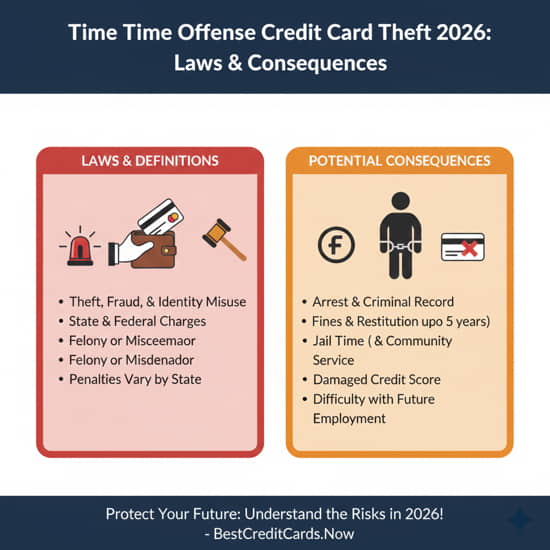
1. What Counts as Credit Card Theft in 2026?
The legal definition has expanded far beyond a stolen wallet. US courts in 2026 recognize several distinct categories:
Physical theft: Taking someone’s card and using it without authorization — the most straightforward case.
Identity theft / application fraud: Using someone’s personal data to apply for a new credit card in their name. This is one of the fastest-growing categories, fueled by data breaches exposing millions of Social Security numbers annually. The FTC’s identity theft data shows credit card fraud remains the most common form of reported identity theft in the US.
Skimming and shimming: Installing hidden devices on ATMs, gas pumps, or point-of-sale terminals to capture card data. Law enforcement has become highly sophisticated at detecting these devices.
Account takeover: Using stolen login credentials to access an existing credit card account and make purchases or transfer funds.
CNP (Card Not Present) fraud: Making online purchases using stolen card numbers without needing the physical card. This is the dominant fraud type in 2026, accounting for the majority of reported cases.
For the broader legal context surrounding these crimes, see: The Legal Landscape: Your 2026 Guide to Credit Card Laws.
2. Misdemeanor or Felony? How Charges Are Classified
The single biggest factor determining your charge level is the dollar amount stolen. Most US states use a threshold system:
Under $500–$1,000 (varies by state): Typically charged as a Class A Misdemeanor. This is still a criminal conviction, but carries lighter penalties.
$1,000–$10,000: Usually a Third-Degree Felony. This is where consequences become life-altering.
Over $10,000, or involving multiple victims/cards: Can escalate to a Second or First-Degree Felony, with sentences ranging up to 10–20 years.
Federal charges: If the fraud crossed state lines or involved a financial institution directly, federal prosecutors may step in under statutes like 18 U.S.C. § 1029 (Access Device Fraud). Federal convictions carry their own separate sentencing guidelines on top of any state charges.
One important nuance in 2026: courts increasingly aggregate multiple small transactions into a single total. Stealing $200 across five cards doesn’t get charged as five separate misdemeanors — it can be combined into one felony charge.
3. Realistic Penalties for First-Time Offenders
Even with no prior criminal record, first-time offenders face serious consequences:
Jail or prison time: 30 days to 1 year for misdemeanors; 1–5 years (sometimes more) for felonies, even on a first offense.
Restitution: Courts almost always require full repayment of stolen amounts — often with additional court-ordered fines on top.
Probation: Typically 1–3 years of supervision. Probation can restrict where you live, whether you can travel, and what jobs you can hold.
Permanent criminal record: This is often the most damaging long-term consequence. A fraud conviction appears on background checks for housing, employment, and professional licensing — sometimes permanently, depending on the state.
Credit consequences: A fraud conviction makes it extremely difficult to obtain a standard credit card or loan for years afterward. If you’re already facing application rejections post-conviction, Credit Card Application Denial Common Reasons in 2026 outlines the specific flags lenders look for and how to address them.
4. Legal Options for First-Time Offenders
The 2026 legal system, in many jurisdictions, does provide paths that avoid a permanent felony conviction — but they require acting quickly and having proper legal representation. See our guide on finding the right attorney: Credit Card Fraud Lawyer 2026: Expert Legal Defense & Victim Rights.
Pre-Trial Diversion Programs: Available in many states for first-time, low-dollar offenses. Completion of community service, restitution, and financial counseling can result in charges being dropped entirely. This is the most favorable outcome for eligible defendants.
Plea Agreements: Prosecutors often offer reduced charges (felony to misdemeanor) in exchange for a guilty plea. Whether to accept depends heavily on your specific circumstances and the strength of evidence.
Expungement: After completing your sentence and maintaining a clean record, many states allow you to petition for expungement — effectively sealing the conviction from most background checks. Timelines vary by state: typically 3–7 years of clean record required.
The Department of Justice’s expungement resources and your state’s court website are the authoritative sources for jurisdiction-specific eligibility rules.
5. The Economic Context: Why 2026 Is a High-Risk Year
Understanding why credit card theft is surging matters for both prevention and legal defense.
US tariff escalations in 2025–2026 pushed consumer prices significantly higher, with household budgets under strain across income levels. Credit card delinquency rates have been rising steadily, and financial desperation is a documented driver of first-time, non-violent financial crime. Courts and prosecutors in many jurisdictions are aware of this context — and in some cases, it influences sentencing, particularly for diversion program eligibility.
At the same time, economic pressure has made banks more aggressive with fraud detection algorithms, meaning some individuals are wrongly flagged or accused. If you believe you’re being misidentified as the offender rather than the victim, that’s a distinct legal situation requiring immediate legal counsel.
6. For Victims: Responding Fast Limits the Damage
If your card was stolen and used, the speed of your response directly determines how much damage is done to your credit and finances.
Report immediately. Call your issuer the moment you notice unauthorized charges. Under the Fair Credit Billing Act, your liability is capped at $50 — and most issuers waive even that under Zero Liability policies. But these protections require prompt reporting. Learn more: Zero Liability Policy Credit Card Meaning: Your 2026 Guide to Fraud Protection.
Monitor proactively. Small test charges ($1–$5) are often the first sign a thief is checking whether your card is active. The Best Way to Monitor Credit Card Statements for Fraud in 2026 covers the specific tools and habits that catch these early.
File a police report. Essential for disputing fraudulent charges with your bank and the credit bureaus. Without it, some disputes become much harder to win.
Place a credit freeze. Free at all three bureaus, this prevents any new accounts from being opened in your name while the investigation proceeds.
7. Rebuilding After a Theft Incident
Whether you were victimized or convicted and have served your time, financial rehabilitation follows a similar path.
The starting point is almost always a secured credit card — you deposit funds that serve as your credit limit, eliminating risk for the issuer. Consistent, on-time payments over 12–18 months are the single most effective way to rebuild a damaged score. Best Credit Cards to Build Credit in 2026 covers the best options available today.
For realistic timeline expectations — how long each negative item stays on your report, when scores typically recover — How Long Does It Take to Repair Bad Credit in 2026? gives an honest breakdown. And for the full roadmap from damaged credit to strong financial standing, Best Credit Cards 2026 — Credit History Zero to Hero is worth bookmarking.
Final Word
A first-time credit card theft charge in 2026 is serious — but it is not necessarily the end of the road. The legal system does offer paths for rehabilitation, especially for low-dollar, first-time cases. What matters most is acting immediately, getting proper legal representation, and understanding exactly what you’re facing before making any decisions.
For victims, the key is speed: report fast, document everything, and monitor your credit closely in the weeks that follow. Financial recovery is absolutely possible — it just requires patience and the right tools.

The Smart Consumer’s Playbook: Your 2026 Guide

Credit Cards and Investment: Your 2026 Guide to Leveraging
Credit Card Fees to Avoid in 2026: Save Your Money
About The Author
